Contrast Therapy 101: What Heat, Then Cold Actually Does
Contrast therapy is the practice of moving the body between hot and cold environments — usually a sauna and a cold plunge — in deliberate cycles. It is one of the oldest recovery practices we have, and one of the most consistently studied. The basics are simple. The benefits compound.
What's actually happening in your body
When you sit in a heat source, the blood vessels near your skin dilate. Your heart rate climbs, sweat starts, and circulation pushes outward to the surface to release heat. The body interprets this as light cardiovascular work — without the impact.
When you then step into a cold plunge, the opposite happens. Vessels constrict sharply, blood is pulled inward to protect the core, and the autonomic nervous system shifts gears. Then you climb out, warm back up, and the cycle resets.
Repeat this three or four times in a session and you've effectively trained the vascular system to switch states quickly. That responsiveness is one of the underrated indicators of resilience — to stress, to inflammation, to recovery between hard days.
The protocol most Luxe members follow
There's no single "right" way to do contrast therapy, but the version most of our members settle into looks like this:
10 minutes in the infrared sauna
2 to 3 minutes in the cold plunge
Repeat three rounds total
End on cold for energy and alertness, or end on heat for sleep and wind-down
Total session: about 45 to 60 minutes. Long enough to feel a real effect, short enough to fit into a real week.
Who contrast therapy is for
Almost everyone, with a few sensible exceptions. The members who get the most out of it tend to fall into three groups:
The recovering athlete
Anyone with a hard training schedule — running, lifting, cycling, classes — uses contrast therapy to compress the recovery window between sessions. Reduced perceived soreness is one of the most consistent reported effects.
The overworked professional
Members with desk-heavy weeks and high stress loads use contrast for the parasympathetic shift the cycle creates. Sleep tends to improve. So does the ability to actually finish the workday and not bring it home.
The consistency-seeker
People who want a wellness practice they can keep — not a one-time experience — find contrast easier to stick to than they expect. The session is short, the effect is real, and the suite is set up before you arrive.
The benefits of contrast therapy are not in any single session. They are in the rhythm of returning.
Who should be careful
Pregnancy, certain cardiovascular conditions, and uncontrolled blood pressure are reasons to talk to your doctor before starting. The Luxe medical team can advise — and our staff will adjust durations and temperatures if needed.
What to expect from your first session
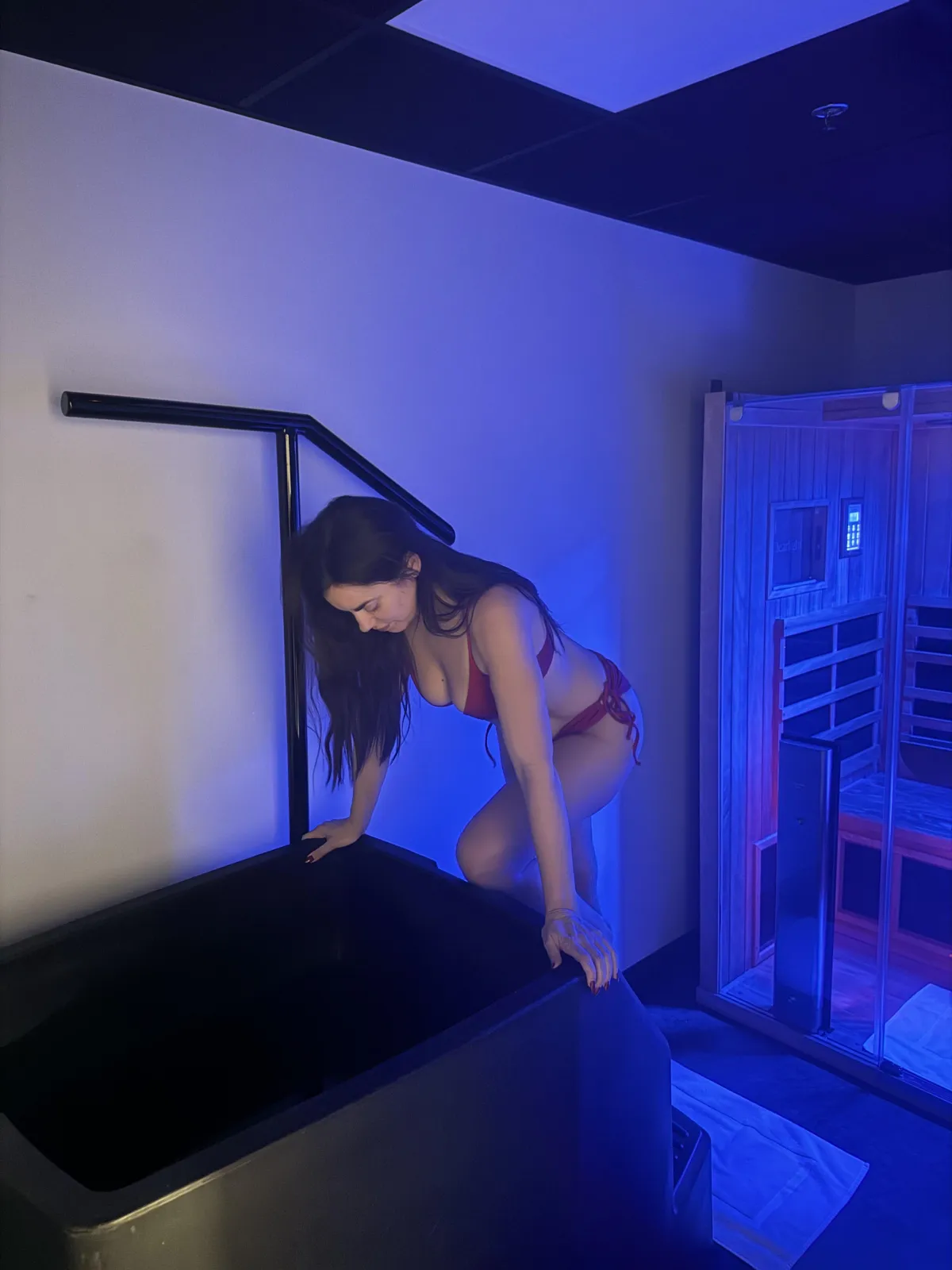
Your suite at Luxe is set up before you arrive. You'll have your own infrared sauna, your own cold plunge, towels, water, and the controls to adjust temperature and chromotherapy color to what you want.
Most first-time members go shorter on the cold side — a minute or 90 seconds — and build up to two or three minutes by the third or fourth visit. There is no expectation of toughness. Cold tolerance builds quickly when you visit consistently.
Why we built the suite this way
Most studios make you piece this together — sauna in one room, plunge in another, schedule around availability. We built the Luxe suite so all three modalities live in one private space. The cold plunge, the Clearlight infrared sauna with red light, and the chromotherapy that runs through every session — all yours for the full hour.
That's the difference. Contrast therapy works only if you actually do it. We made the doing part as easy as we could.
