How Cold Plunging Actually Works (And How Long You Need)
Cold plunging has gone from fringe practice to morning-routine staple in a few short years. Most of the science behind it is solid. Most of the duration recommendations are not. Here's how it actually works in the body, and how long you really need to spend in the water.
What happens when you step in
The first thing your body does is contract — every blood vessel near the skin clamps down to push warm blood inward. Your breathing sharpens. Your heart rate jumps and then settles. Within 30 seconds, the cold-shock response peaks and starts to fade.
If you stay in, your sympathetic nervous system stays activated — adrenaline and noradrenaline spike to two or three times baseline. This is the source of the "cold high" most people describe afterward: clarity, focus, a quieter mood for hours.
Once you climb out, the vessels reopen. Warm blood rushes back to the surface. Inflammation markers drop. The autonomic nervous system shifts from sympathetic dominance back toward parasympathetic. For a window of an hour or two, you're functioning in a different state.
The duration question
This is where most advice goes wrong. There's a popular idea that more cold = more benefit. The research doesn't really support that.
The benchmark from Dr. Susanna Søberg's research is roughly 11 minutes per week of cold exposure, broken into multiple sessions. That's the minimum threshold associated with metabolic and mood benefits. You don't need to chase more.
Practically, that means:
2 to 3 minutes per session, three to four times a week, hits the threshold
1 minute is enough to start — cold tolerance builds quickly
Beyond 5 minutes in cold water (50°F or below), additional benefits flatten while risks rise
Different durations, different goals
For mood and focus: 1–3 minutes
The dopamine and noradrenaline spike happens fast. You don't need to push past three minutes to get the mental effects. Many members do a quick plunge before work and call it done.
For recovery from training: 3–5 minutes, separated from your workout
Cold immediately after intense training can blunt some of the muscle-building signals you want from the workout. The smarter approach: wait at least 4 to 6 hours after a hard session, then plunge. Or use it on rest days.
For metabolic and inflammation benefits: regularity over duration
The accumulated weekly minutes matter more than any single session. Three short sessions beat one long one.
Three minutes done four times a week beats fifteen minutes done once. The body adapts to consistency, not intensity.
What about contrast?
Pairing cold plunge with infrared sauna creates the full contrast therapy practice — alternating hot and cold to amplify both responses. Most Luxe members who use cold plunge regularly do it as part of contrast cycles rather than alone. The sauna warm-up makes the cold easier to tolerate, and the cycle is more effective than either modality alone.
Who should be careful
Cold plunge is intense for the cardiovascular system. Conditions to discuss with a doctor before starting:
Cardiovascular disease, recent cardiac events, or arrhythmias
Uncontrolled hypertension
Pregnancy
Raynaud's syndrome or peripheral vascular conditions
If you're cleared, start short (60 seconds), warm up before, and never plunge alone if you're new. Our staff at Luxe set the suite up so you can ease in without pressure to push past your tolerance.
What to expect from a Luxe cold plunge
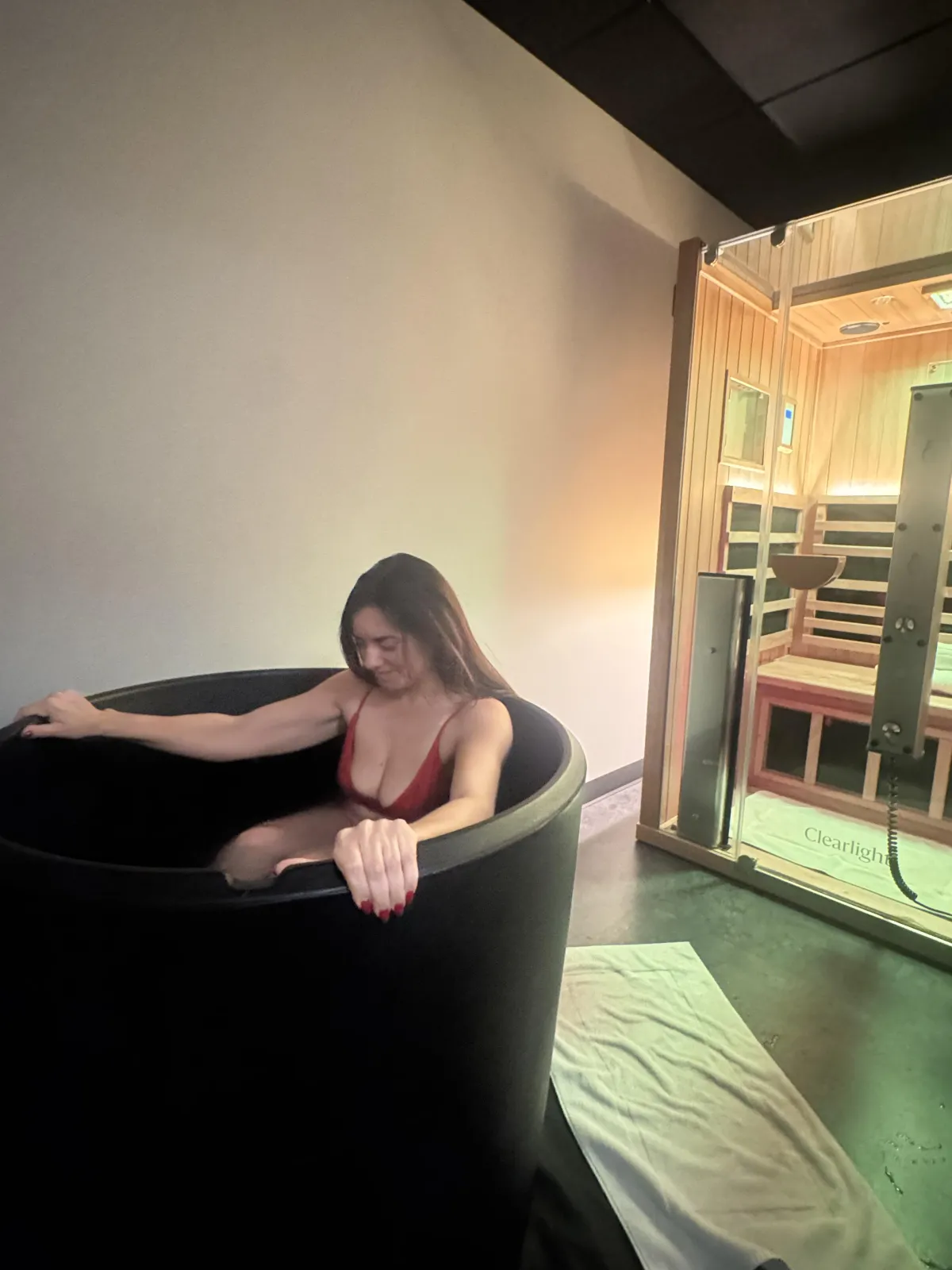
Our cold plunges run at 50°F. Each plunge is in your private suite — yours for the session, set up before you arrive, with the sauna right next to it for contrast cycles. Towels and water waiting. No sharing. No wait.
Most first-timers do 60 to 90 seconds, build up to two or three minutes by the third visit, and settle into a regular rhythm from there.
Book a cold plunge session at luxewellness.studio.
